My brain can't leave an object alone. It looks at a thing and asks three questions, every time: what is this, what could it become, what does it need. Then it decides.
I don't refresh furniture. I re-architect objects.
I work alone, by hand. I find things. On the street, in a house someone is clearing out, in the scrap of my own projects. Before I touch a piece I ask it three things. What is it. What could it become. What does it need. Then I decide. Keep the form and change the use. Keep the object and rebuild its identity in colour. Or take the parts and build something that never existed.
Colour does the deciding. Not an accent on a safe base. Structure. It sets the hierarchy and the weight, it gives the piece its character. Bold against soft, light against dark, held in tension on purpose. No beige. Beige is a way of saying nothing.
All of it starts from material that already exists. People call it old, used, thrown out. It was never rubbish. It's material with a life already in it, and a dent or a mark from that life can stay.
My head doesn't run in a straight line. I'll prime a door ring and twenty minutes later I'm reading about Arte Povera. For a long time I hid that. Now I think it's the whole method.
This is not a chalk-paint refresh. Not a flip. It's design and craft, built to carry another long life.
Eight pieces. Second Act.
Before I take an object in, I read it. The same three questions, every time. The answer decides which of three modes the piece moves through.
The material gets a new function. Scrap becomes something that never existed.
The form stays, the use changes.
The object stays recognisable, the identity rebuilt through colour.
This is the same reading behind the Object Diagnosis. Run it on your own piece, for €19.
Eight works, released as they're finished, not all at once. Some are ready to buy. Some are still a drawing. Buy what's finished, or join the waitlist for what's coming and pay once there's a photo. Click any piece for its full story, colour system and dimensions.
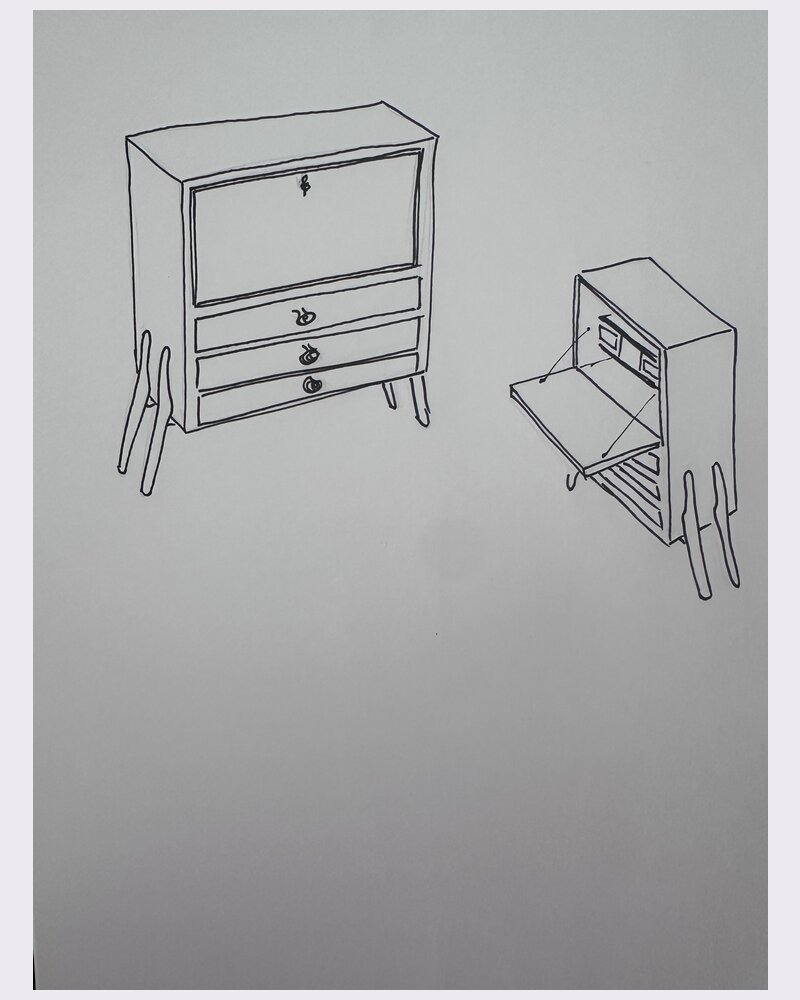 Drops SeptemberDrawing
A 1960s desk, rescued from a house clearance near Brussels. Still a desk, no longer the same object. The original feet come back as the door handles.
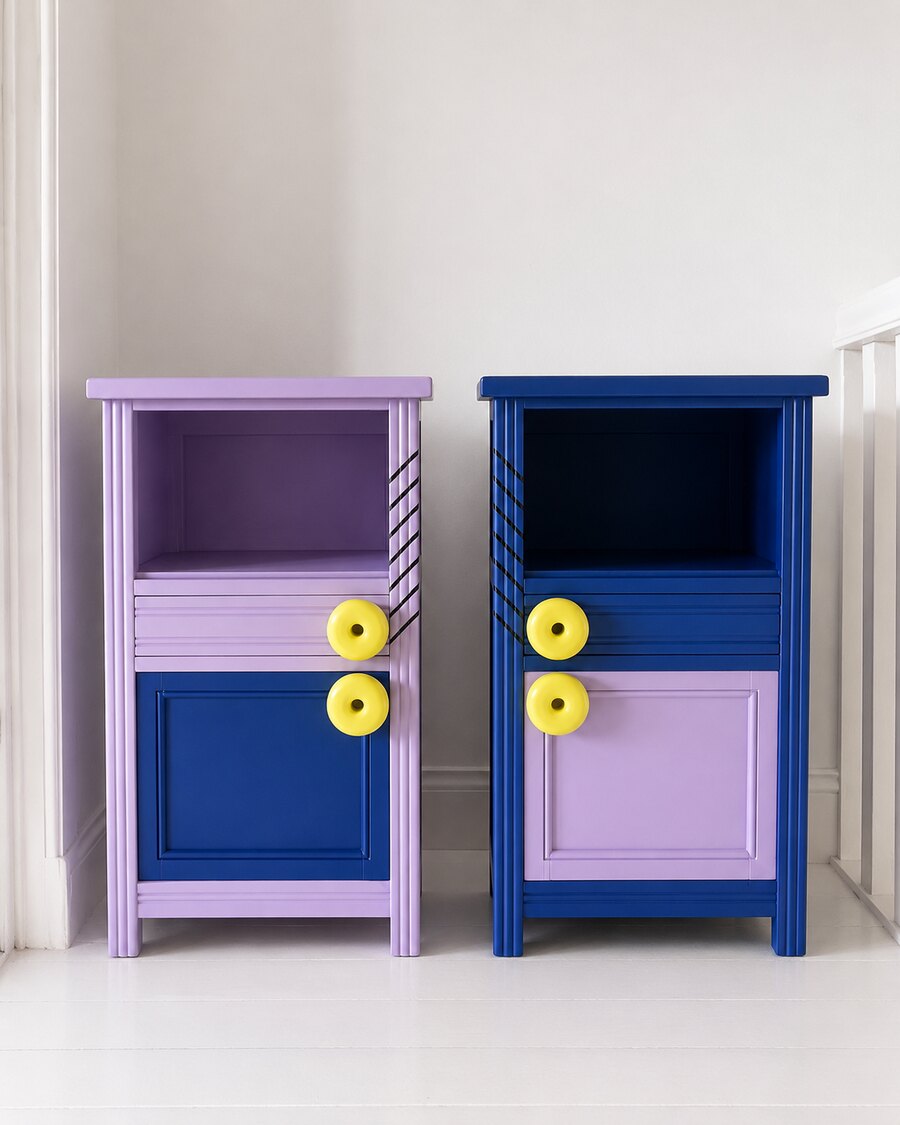 Available now
A 1920s night piece, found broken in the rain on our street in Berchem. Rebuilt in cobalt, with an oversized multiplex handle and hand-applied stripe detailing.
Available now
Its lilac twin, from the same pair found in Berchem. Rebuilt the same way, in lilac, with an oversized multiplex handle. Sold on its own, or take both.
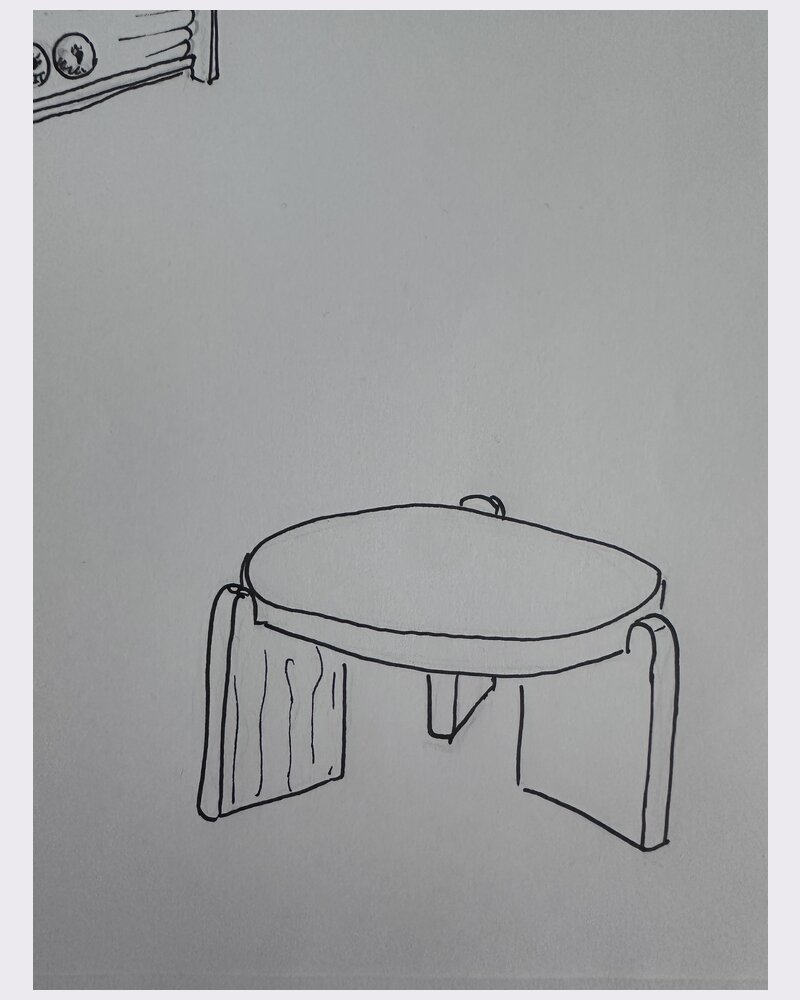 Drops SeptemberDrawing
A side piece built from the offcuts of other projects, one leg finished in a colour wash. Reconstructed from leftover material into something that didn't exist before.
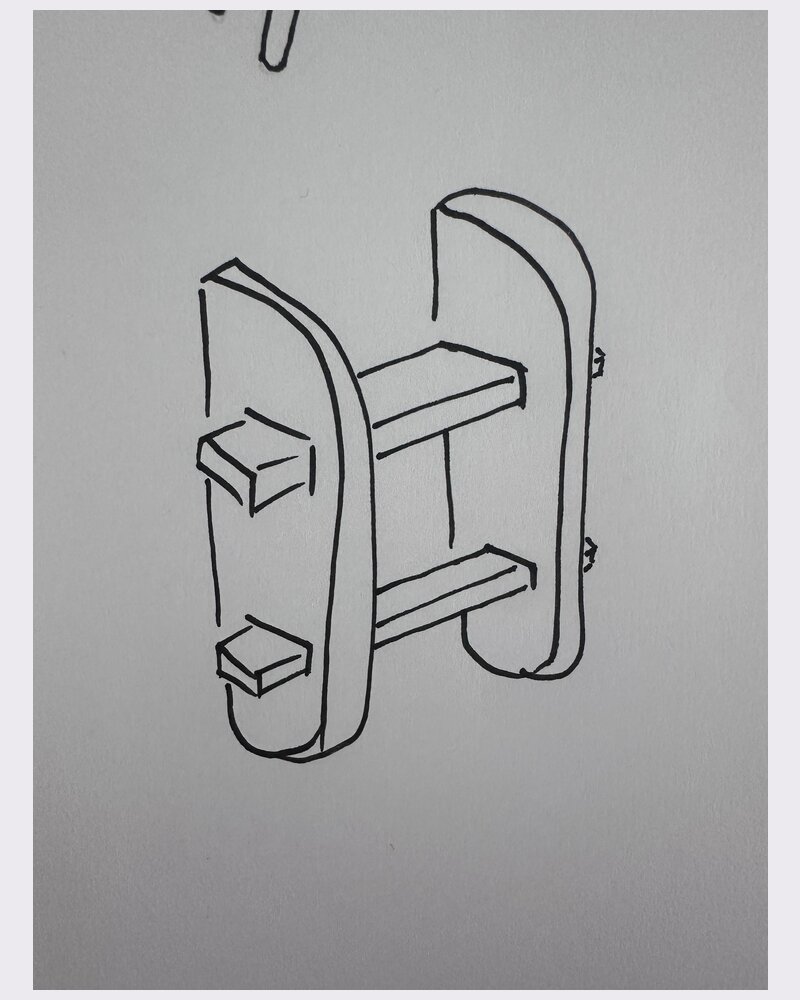 In prototypingDrawing
Wall pieces taking shape in salvaged marble, a renovation's old oven surround with no oven left. One work in three sizes, Small, Medium and Large. Heavy, warm-toned, still finding its form.
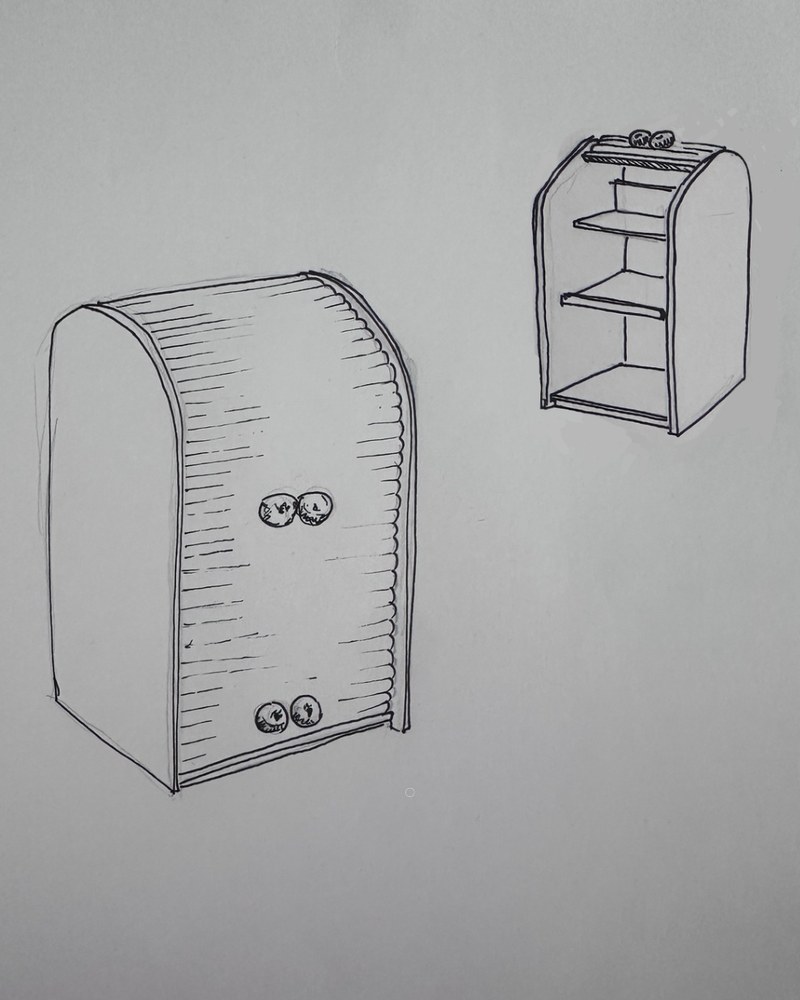 In conceptDrawing
One of an inherited UMS Pastoe pair. The plastic doors are gone, so I'm building a durable new sliding door in wooden slats. Pastoe is worth the love, rebuilt to a collectible standard.
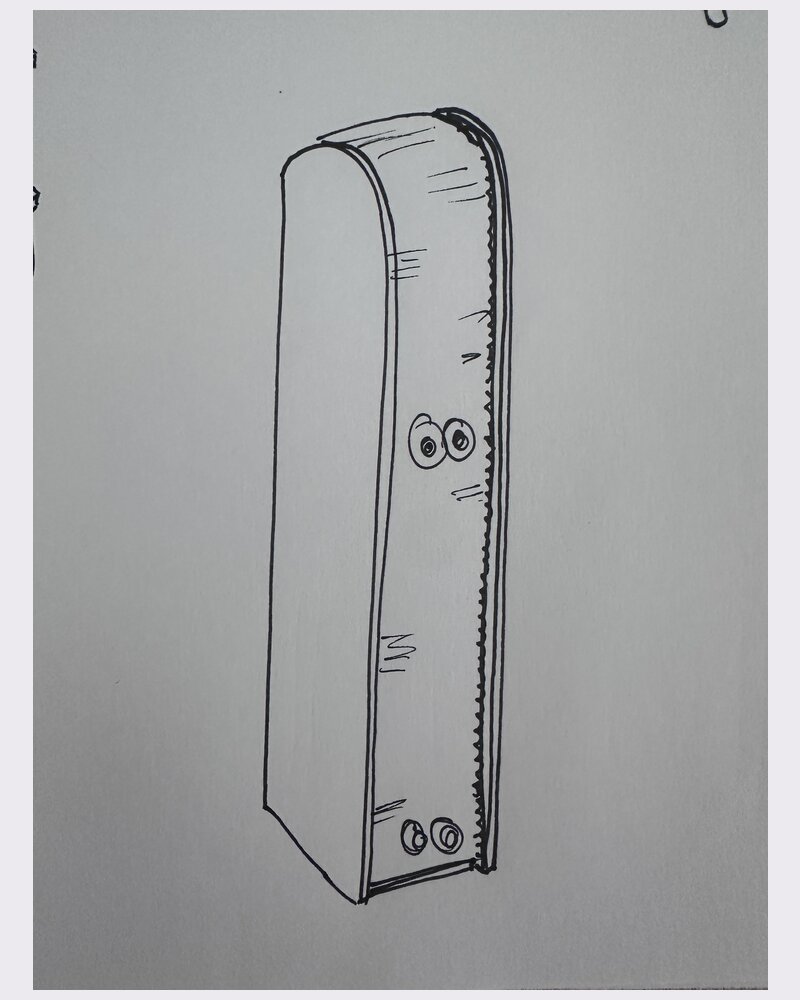 In conceptDrawing
The second UMS Pastoe, water-damaged, waiting for a second life. Stripped back and rebuilt with the same durable wooden-slat sliding door. Both closets need work, and both are worth it.
The eighth and final piece, and a desk. Named LAYR, for the layers of every colour at once: lilac, aubergine, yellow, red. Price and layout revealed at the drop.
Eight is the goal, seven is publishable. Pieces go live as they're finished. Nothing waits on the last one.
All prices include 21% Belgian VAT. A VAT invoice is available on request.
I work alone, by hand, from a shared atelier in Antwerp. Second Act is eight pieces, each built from furniture that already existed. Found on the street, inherited from a house being cleared out, passed on by colleagues, pulled from a construction site, or reconstructed from the scrap of earlier work.
My practice sits between two positions. From Memphis, colour as structure. Colour that sets the hierarchy and weight of a piece, not a finish laid over a neutral base. From Arte Povera, an ethic of found material. The value sits in the object that already carries a history, not in something bought new.
Each piece moves through one of three modes. Recontextualised, where the material takes on a function it never had. Reinterpreted, where the form stays and the use changes. Redesigned, where the object keeps its outline while its identity is rebuilt in colour. Before I touch anything, the same reading: what it is, what it can become, what it needs to carry another long life.
The work is deliberately polarising. Loud where most furniture is quiet, engineered where most redesign is cosmetic. It refuses the beige, safe register that asks a room to please everyone.
I don't work in a straight line. A colour decision arrives while I'm reading. A structural solution while I'm sanding. That non-linear way of working isn't a detour from the practice. In Second Act, it is the practice.
Leave your email. Only relevant updates on Second Act, no spam. Nicola Beger is not responsible for sudden crushes on furniture.
Notify me of the next dropPiece already reserved or sold? See Commission Catalogue for what's available now and the full archive.